
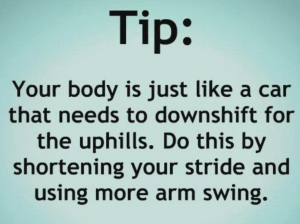
What happens when your legs are tired but your run isn’t over? When you are exhausted, close to the finish line, look up, and see a big hill you have to climb?
According to the Breakingmuscle.com article, “The Ups And Downs Of Running: How To Properly Run Hills And Stairs,” in order to run uphill most efficiently runners must:
Use your arms! Arms are [the] key to running and sprinting, and are especially useful for anything uphill or anything utilizing knee movements. I cannot emphasize the use of the arms enough. The action of the arms essentially move the legs, so remember this anytime you walk, run, sprint, bounce, lunge, jump, or hop. Arms should be kept tight, bent at ninety-degree angles and close to the sides. The arms correspond with the legs – opposite arm matches with opposite leg – so work on matching the timing between both upper and lower body.
Just like a car, we need to shorten our stride and use our arms to power us up hills. With our arms being so important in these situations, we must spend some time making them stronger!
Day 16 exercises: 3 sets of 10
****Click here for how to videos****
- Bicep Curls
- Shoulder Press
- Tricep Overhead Extension
- Plank – :60 (plank of your choice)
Bonus: Do the Challenge exercises! Even if you haven’t jumped on the “extra challenge” band wagon, today is the day to do a little more and work those arms! Push ups and burpees are great ways to build strength in our arms which will help us power up those hills and stairs when we’re tired. Beginner push ups are fine…and skip the push ups when you do the burpees. I know burpees are hard and scary, but you can do them and you will burn TONS of calories in the process!
Challenges:
- Burpees – 40
- Push Ups Beginner – 12
- Push Ups Advanced – 60
- Squats – 80
Speed Work: Climb ladders
Ladder workouts are speed sessions that vary the length of the work intervals in incremental steps and are a great way to get a mix of several high-intensity running paces in a single session. Go to the track or use your GPS watch to track your distance., warm up with 10 minutes of easy running, and try one of these ladders. Run each interval slightly faster than the preceding one, and jog, walk 400 meters (or just stand still and breath deeply) between each interval.
Starter ladder: 400M (1/4 mile), 800M (1/2 mile), 1600M (mile), 800M (1/2 mile), 400M (1/4 mile).
Advanced ladder: 200M (.1 mile), 400M, 800M, 1200M, 1600M, 1200M, 1000M, 800M, 400M, 200M
No matter what choices you made over the weekend…it’s time to shake it off and get back to work. Set the tone for the week and make good choices today!






 YAYYYY…it’s Friday!!


 Once you’ve mastered bodyweight squats, switching to single-leg squats (a.k.a. pistol squats) is a great, gear-free way to increase loads and build max strength for each leg. “Running is nothing more than pushing off one leg at a time while maintaining balance.”
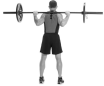 This move involves placing the barbell across the upper back, rather than on top of the shoulders, upping the demand placed on the glutes, says Jason Fitzgerald, a 2:39 marathoner, USA Track & Field-certified coach, and founder of Strength Running. That’s huge, as the glutes tend to be underdeveloped in runners, contributing significantly to lower-body injuries.
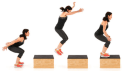 Adding an explosive, plyometric element to your squats strengthens your legs’ elastic properties and trains your muscles to generate more force in less time, Hamilton says. Those are major benefits to anyone regularly pounding the pavement.
 “I love this lift, which is executed just like a regular squat with a bar held above the head, because it’s less about strength and more about mobility, control, and balance—elements of general athleticism that are important for runners who tend to only run.” Fitzgerald says.
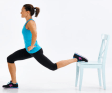 Another single-leg exercise, this one hones balance while also training the gluteus medius to a higher degree than many squat variations. For those commonly plagued by IT band and other knee issues, this is a must.
 “By holding the barbell across the front, rather than the back, of the shoulders, this is a more quad-dominant squat,” Fitzgerald says. This exercise presents a great opportunity for runners to train their quads eccentrically—or as they lengthen. Doing so will make running downhill feel easier.
 Good morning! Rough night for me in Florida…it is WAY TOO HOT HERE! UGH!







 Strong to the Core