Day 8: Did Someone Say Burpees?

Screen Shot 2017-05-08 at 5.33.46 AM
I’m pretty sure I don’t need to go on and on about the effectiveness of burpees right? I know they suck y’all…but they are the single most important thing on today’s list. DO NOT SKIP THEM! Link below to modify…find a way that works for you and just do it!

Meatless Monday: Plan ahead to tackle today’s food challenge and don’t forget…21 Days no junk is still on. Y’all are doing awesome KEEP PUSHING!

Speed Work: This week’s speed work is going to help your 5K time!

The single component that improves pace in races is a weekly speed session. Most runners choose Tuesday or Wednesday as “speed day”. Depending on your fitness level and length of long run, start with 4-6, 8-10, or 10-12 x 400. (Reach out to me if you’re not sure how many of these you should be doing – 4 is the minimum!) Each 400 (one lap around a track) should be run 8 seconds faster than you want to average per quarter mile in your 5K race. For example, if you wanted to run 8 minutes per mile, your quarter mile race pace would need to be 2 minutes. The workout pace per lap should in this case be 1:52. Walk for half a lap between the 400s or just stand still and breathe!

Warmup: Prepare for the faster running with a thorough warmup. Walk for 2-5 minutes at first to get the blood flowing. Then, run half a mile at an easy conversation pace. Finally, do 4-8 acceleration strides.

Strides: Start each with a slow jog for about 10 steps, then a faster jog for @ 10 steps. Over the next 15 steps, gradually speed up to what you feel is your 5K race pace, then gradually glide back to a jog over the next 30-40 steps. Striding is similar to coasting off your momentum as you go down a hill and out onto the flat. If you practice this at least once a week you will learn how to save the running muscles while you are running. Walk or rest for 2-3 minutes between the last one and the start of first 400 meter repetition.

Warm Down: After your workout, don’t stop. Jog slowly, using as many walk breaks as you wish for the next 10 minutes. You’re done!

Injury Risk: Whenever you run faster than you’ve been running, there’s an increased risk of injury. This can be reduced by choosing a realistic goal and warming up even more on days when this is needed, and never pushing through pain, loss of function or swelling in a running body part. Continuing to run fast, when there is damage, can increase the time needed for repair. It is also important to have enough rest after each workout to allow the muscles, tendons, etc. to rebuild stronger.

Day 8 exercises & Food Challenge:

  • Meatless Monday
  • No Junk (see list if you need a reminder)
  • 100 Jumping Jacks
  • 100 Crunches
  • 40 Burpees
  • :60 Plank

Bonus: Modern Moms/Dads Hip Strength – I know we add this one a lot but it is quick (4 min per leg) and effective and can be done daily if you need (we all do) to strengthen those hips! 🙂

Burpee Variations: Burpee Variatins: Perfect burpee variations for beginners. This video will show you how to do burpee variations that will allow us all to do this super awesome (and most hated) exercise!

1 large fries = 524 burpees….do you really want those fries? 🙂 Make it a great day of activity and healthy eating Crew!

Screen Shot 2017-05-08 at 5.34.25 AM

Day 7: Jump for Joy!

Screen Shot 2017-05-07 at 3.22.29 AM.png

Jump for joy, take a dip, squat on a wall, then plank it out!

Sunday’s are not a rest day in May, but at least it’s short and sweet!

What an amazing weekend so far! No way I could keep up with y’all yesterday….thank goodness for buddies! 🙂 As promised, I am up with the chickens and getting ready for my favorite thing…long run! Heading out shortly for some miles with Amiee and with the Florida weather cooperating, I can’t wait!

Taking my phone with me so I can get motivation from all our Crew members racing today! Hope I can remember all the baddassery going on here today….

Susan and Jen are running the Flying Pig! Philly Core Crew – Kristy, Rakhee, Tina, Brigid, Regina, Jamie, Lisa and Marcela are tacking the Broad Street 10 miler!

Linda Morgan is in Pittsburg running the full!

Who else is racing OR going long today? We are with you in spirit and can’t wait to hear about it!

If you already raced or went long this weekend, don’t be sedentary today. Be active with our Day 7 exercises, take a few extra minutes to stretch out those muscles, remember to stick to your “one weekend treat” plan, and get ready for another fabulous week!

Day 7 exercises:

  • 100 Jumping Jacks
  • 50 Tricep Dips
  • :60 Wall Sit
  • :60 Plank

Seriously….5 minutes Crew! If you can’t do jumping jacks…try some of these jumping jack alternatives and get that heart rate up!

Jumping jacks are almost the perfect exercise: They work every major muscle group in your body and don’t require any special equipment. But jumping jacks also involve a fair amount of impact and require good range of motion through the shoulders. If you can’t handle the pounding or arm movement required, it’s time to explore some effective alternative exercises.

You could substitute almost any low-impact, lower-body movement with a lateral component into jumping jacks. Try doing squat jacks — step to one side and squat as you swing your arms up and then go back as you bring your arms back down. You could even do lunging jacks.

To do lunging jacks, step into a back lunge, rotating your torso toward the side of your back leg and swinging your arms together overhead; rotate back to the middle as you stand back up, switch leading legs and then twist your torso toward the side of your back leg. This requires good core strength and awareness.

Heel jacks are handy if you have weak or injury prone knees. Full-force jumping jacks or lunge variations will place stress on weak or painful joints of the lower leg, hip and back. The heel jack uses simple motions but keeps the heart pumping during an aerobic workout. This move uses the same arm movements as a regular jumping jack. When your arms go up, alternate kicking up with your heels in rapid succession. Only kick as high and as fast as you feel comfortable.

If your shoulders aren’t stable or mobile enough for the arm motion required for full jumping jacks, you have two options. The first is to limit yourself to a safe, comfortable range of motion. Try swinging your arms out to shoulder level instead of overhead. Or substitute any upper-body motion that you can do into your jumping jacks. Examples include doing biceps curls or shadow boxing as you continue doing the lower-body portion of a jumping jack.

You can also get similar benefits by doing other types of calisthenics. Try mountain climbers or star jumps. To do star jumps, stand with your feet shoulder-width apart. Squat down, bend forward slightly at the hips and then explode upward, jumping off the ground as you spread both arms and legs to form the “star.”

We always have Yoga as an option too! If you want to quiet your mind and body, choose one of our Yoga for Runners routines and let the stress go!

Yoga for Runners:

  1. Unknot Yourself
  2. Tight Hips and Legs
  3. Yoga Poses for Runners

So many options! Whatever you do, CHOOSE to be active today Crew! 🙂

Screen Shot 2017-05-07 at 3.49.44 AM

Day 6: Fly like Superman!

Screen Shot 2017-04-29 at 7.19.58 PM
Throwing mom under the bus here, but she loves me so I’m sure I will be forgiven….
 
My mom calls me last night and says, “So all we’re supposed to do today is eat some extra fruit right?”
 
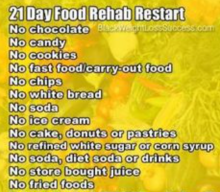
Me: “No mom, we’re doing a 21 day Food Rehab Restart which basically means no junk, no white bread, no cookies, no candy, no fast food, no chips, no soda, no ice cream, no cakes or donuts, no juice and no fried foods AND Friday is Fruity Friday so we’re eating extra fruit today.”
 
Mom: “Oh”
 
Crew….y’all are doing AWESOME! I don’t want anyone to think I am coming down on you because seriously, y’all are ROCKING this month! My posts have been kinda long this week cause well…there’s lots to say, so I don’t want to bog y’all down with even more words talking about the 21 Day No Junk Challenge. But don’t forget that is a huge part of this month!
 
We all have moments of weakness but I hope you are keeping an eye on the prize and remembering why we are doing this. Summer Beach Body, getting to our goal running weight, FEELING GOOD! It’s not all about dropping weight and having a perfect summer body. I want you to LOVE your body and that includes nursing it with healthy foods. This is all about learning how to eat to feel good and fueling our bodies to be the best we can be on and off the road.
 
Saturday and Sunday are “Treat Yourself ONE time on the weekend” This does not mean treat yourself ALL weekend. This can be one meal, one awesome treat, ONE TIME! LOL
 
Think about how you are fueling yourself this weekend and don’t waste all your hard work by being glutinous and devouring junk! 🙂
 
Think about flying like Superman….I bet even he’d have a hard time flying if his gut was bogged down by crappy kryptonite. 😉
 
Done with the lecture and on to the weekend!
 
Day 6 exercises:
  • 50 Superman
  • 200 Jump Rope
  • :60 Wall Sit
3 exercises + Long Run & 7 Key Stretches for Runners
 

Good luck to all those racing and going long this weekend! Be #CoreCrewStrong and go out and rock it!

Screen Shot 2017-05-06 at 5.43.50 AM.png

Day 5: Own Today!

Own Today – Day of 100s and Fruity Friday!

Screen Shot 2017-05-05 at 4.19.51 AM

Going into the weekend I want to share with you a little story that my good friend Chris Atkinson sent me last night. She needs a little extra motivation as she has fallen off the workout wagon so let’s show her some love and get her back on track!

A motivational message from Fellow Flowers “Slightly modified” because it originally focused on tris and we know this applies to ALL training. 🙂

11 pm…and done:

Because if it doesn’t happen today, it doesn’t happen. See, what I’m learning about training is you can’t find more time or get it done later. There’s no time hacking system or wiggle room. Because ‘later’ has another workout on deck waiting for you, and ‘later’ is already going to require max effort.

‘If you miss it, give yourself some grace, let go and move on because there’s nothing you can do about it.’ (Love this!)

So it has to be now. It has to be today. Or you lose it. The opportunity, the chance, the work.

Now, believe me, I have given myself plenty of grace in letting go of missed workouts. Because…life, kiddos, work, soccer games, date nights, staying sane, self care.

Perfection does not exist in this journey, but tonight I had no excuse other than it was late and I didn’t want to. OH MY GOODNESS the justifications I was giving myself. Up until the moment I was literally on the bike seat I was trying to think of a good reason to bag it.

But then I remembered five little words from our red flower — BECAUSE I SAID I WOULD.

Yes. I sure did. Be all in and regret nothing. Embrace the suck. LOVE THE GRIND. So I grabbed my red flower and I got it done. I’ll take it.


Own today Crew!

Own every single day. When you slip up, shake it off and move on. Don’t try to “catch up” just move on.

We’re taking it easier today with no bonus BUT I want you to think about Fruity Friday as a MUST DO. There is no wiggle room here. Grab some fruit and make sure it is part of your day. If you already eat fruit, eat more! 🙂

Fruity Friday: Your breakfast and lunch should contain a serving of fruit. If they already do, make it 7-8 servings of fruit today!

What does one serving look like?

ONE SERVING OF FRUIT CAN BE:

  • 1 medium banana
  • 6 strawberries
  • 1 plum
  • 20 grapes
  • 1 medium apple
  • 1 medium peach
  • ½ cup (125 mL) of 100% orange or other 100% fruit juice

See more at: Half Your Plate

An added bonus: Eating 7-8 Fruits And Vegetables Per Day Will Make You Happier

“Eating fruits and vegetables is strongly associated with peak mental well-being, according to a new study from the National Bureau of Economic Research.”

Using data covering 80,000 randomly selected British individuals along with seven accepted measures of well-being, they found that happiness and mental health rise in proportion to the number of daily servings of fruit and vegetables, peaking at 7-8 servings of 2.8 ounces each.

The pattern remains “remarkably robust” when adjusted for a large number of other demographic, social and economic variables, the study found.

Even after isolating confounding variables, it was found that individuals consuming at least 7 servings a day were 2.7 percent happier than those who eat almost no fruit and vegetables.


Get your exercises done, STRETCH and ROLL to be ready to go long this weekend and do not let go of the hydration. With long runs around the corner, it is just as important to hydrate today as it was yesterday. I know the daily challenge helps remind us…but working extra builds into your daily routine is the ultimate goal!

Day 5 exercises:

  • 100 High Knees
  • 100 Russian Twists
  • 100 Jumping Jacks
  • :60 Plank

7 Key Stretches for Runners

Day 4: Thirsty Thursday + Abs, Triceps & Cardio

Screen Shot 2017-05-04 at 4.10.27 AM
Looks like a lot…but it’s really not so don’t get scared!
 
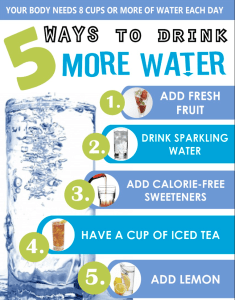
The workout will go by quickly….but the real challenge will br drinking lots of water! 8+ glasses of water today Crew! Start as soon as you get up and carry water with you all day. Not only is tis a great way to flush out your system, but it will help you get hydrated for those long runs and races this weekend!
 
Drink this…according to Runner’s World –
 
Picture a blazing 90ºF Saturday in May. Your basic instinct tells you to lie panting in the breezeway with the dog, or poolside with a cold drink. But your so-called “higher reasoning” tells you that your success in your next marathon hinges on completing long runs. What’s it going to be?
 
Never mind, you’re a runner, so we know how you’re going to answer that. Which means you need to know this: Drinking an adequate amount of fluids is the single most important thing you can do before, during, and after a run. Especially a long run on a hot day.
 
So grab a cool drink, find a comfortable place to sit, and listen up. Here come the eight rules of fluid replacement, and how they’ll energize your running.
 
1) Drink early and often–every day. With dehydration, a drop of prevention is worth an ocean of cure. Drink water or other low-calorie fluids in small, steady quantities throughout each day, to the point when your urine flows clear. Bring a water bottle with you wherever you go, or take a drink every time you pass a water fountain at work or school. Staying well-hydrated throughout the day benefits you in ways beyond your running. It helps keep you alert and will prevent that dull, headachy feeling that slows you down in the middle of the day.
 
2) Fortify yourself with fluids before you run, and aggressively consume fluids during your run. An hour or two before your run or race (depending on your tolerance), top off your fluid tank by guzzling 16 ounces of water or sports drink. Then take in between 5 and 12 ounces of fluid every 15 to 20 minutes during the run. If you’re running for less than an hour, you’ll be fine drinking just water. Your body’s stores of carbohydrates and electrolytes are sufficient to carry you for at least that long.
 
3) When you run long, use a sports drink. Study after study shows that for exercise lasting more than an hour, runners perform significantly better when drinking a sports drink than when drinking plain water. Sports drinks contain carbohydrates at a concentration of about 7 percent, which, by the way, is significantly lower than that in your average soft drink. This is good, because the lower concentration enables you to absorb the fluid more quickly. Its carbs provide fuel, while its electrolytes–sodium and potassium–stave off cramps, nausea, and hyponatremia (a dangerous condition caused by drinking too much water). Go with a flavor you like as this will encourage you to drink more.
 
4) Don’t wait until you’re thirsty to start drinking. By then, it could be too late. In other words, the old tenet of “listening to your body” doesn’t work when it comes to fluid replacement. We often don’t feel thirsty before or in the early stages of a long run, but that’s exactly when we need to start drinking. Otherwise, dehydration can set off a chain of negative reactions.
 
5) Don’t drink too much. If you feel or hear sloshing in your stomach, its telling you it’s full, and you don’t need to drink for a while. You might have to monitor this carefully, though, because we all have varying rates at which fluids leave our stomachs and enter the rest of our systems. Variations in size, gender, age, and metabolism come into play. You might not slosh; you might cramp or feel nauseated instead. Whatever signal you receive, stop drinking for at least 15 minutes.
 
6) After your run, drink between 16 and 24 ounces of sports drink for every pound of body weight you lost during exercise. This means you’ll take in more than you lost, but that’s okay because you’ll urinate some of it away. Again, make sure you consume sports drinks or other fluids that contain sodium, which will help you retain the fluid you drink.
 
7) Beware of hyponatremia, a potentially fatal condition caused by taking in too much water and too little salt. Hyponatremia, or “water intoxication,” usually happens only during long, hot runs, when a runner loses a lot of sodium through sweat and consumes a great deal of plain water. This combination may unwittingly dilute sodium levels in your blood, which sets off an electrolyte imbalance. Hyponatremia can trigger seizures, coma, and even death. Initial warning signs mimic those of dehydration, including confusion, disorientation, muscle weakness, and vomiting. Women and slower, beginner endurance runners are at most risk of this condition. Banish hyponatremia from your worry list by 1) including salt in your normal diet (particularly a few days before a long event), and 2) drinking sports drinks, rather than plain water, on runs over an hour.
 
8) Be careful out there. The better your overall condition, the better you’ll be able to cope with low or moderate degrees of dehydration. (Case in point: In the 1984 Olympic Marathon, Alberto Salazar lost 8.1 percent of his body weight in sweat, and still ran a 2:14.) But if you feel yourself slipping into fluid debt-symptoms include chills, dizziness, disorientation, and cessation of sweating-don’t panic. Stop running, find shade or an air-conditioned building, and start drinking as soon as possible. If you don’t quickly improve, ask for help or call 911. If you do start to feel better, resist running and walk or ask for a ride home. Then vow to never let yourself become dehydrated again.

Try this method for measuring how much water you should drink during and after your runs: Immediately before and after several upcoming runs (especially those in hot weather), weigh yourself without any clothes on. If you lose 1 pound, this means you sweated approximately 16 ounces of fluid. Two pounds means you sweated 32 ounces, and so on. If you lose a pound consistently during your 30-minute runs, you need to replenish your fluids at a rate of 16 ounces per 30 minutes of running.

If you find you can’t drink enough to offset your sweat loss no matter how hard you try, don’t worry. Just make sure to “overdrink” once you finish your run. That is, if you lose a pound, you should drink one-and-a-half times your normal replenishment amount, or 24 ounces. This beverage should contain sodium, which will help you retain the fluid better.

Dehydrated athletes fatigue significantly faster than those who stay hydrated, yet the typical runner replaces less than 50 percent of his or her sweat during exercise.

According to Scale – Officials at the Western States 100-Mile Endurance Run in California actually lug bathroom scales into the Sierra Nevada mountains, and place them at the aid stations. Why? So runners can weigh themselves during their trek, enabling them to balance their fluid intake with their fluid loss. This low-tech method remains the best way to figure out how much you need to drink while running.

I would love to see you guys weighing in before you long runs this weekend. Again, you don’t have to post your weigh ins…but this is not about weight. This is about making sure you are staying hydrated throughout your run and avoiding potential dangerous situations. You DO NOT need to be an ultra runner to suffer from dehydration or hyponatremia.

Good news and bad news: “Consumption of zero-calorie artificial sweeteners in a drink may have an identical effect on gut responses as water, according to newly published human data.”

That’s the good news. The bad news? “Those studies indicate that artificial sweeteners may interact with the gut in the long term. So far it appears that artificial sweeteners have limited impact in the short term, but in people in a pre-diabetic or diabetic state, who are more likely to be regular high users of artificial sweeteners, it might be a different story all-together. More research is needed.”

Instead of adding an artificial sweetener to your water, try adding lemon and a SMALL amount of honey or agave. Both honey and agave have nutritional and enzymatic benefits (unlike sugar and artificial sweeteners); however, they still convert to sugar in the body and are recommended in very small amounts for those with diabetes.

Have I convinced you to take on Thirsty Thursday? I hope so! If you feel the need to drink some form of alcohol today, keep it to a minimum. Like 1 glass! If you can skip it all together today, that’s even better. We’re not here to deny you your favorites things….think moderation Crew.

Remember…small steps to reach big goals!

Day 4 exercises: 

  • 100 Crunches
  • 40 Tricep Dips
  • 100 Jump Rope
  • :60 Wall Sit

Bonus: Modern Moms/Dads Hip Strength – Always a favorite and a great way to strengthen and tighten or hips and thighs. 4 minutes each leg. Add in after your workout or before you go to bed.

———————————————————————————————————————————-
If you haven’t gotten in your week one 5K, today would be a good day for it! Don’t let this stress you out. Just go out and run. This is a benchmark for the month so it doesn’t have to be your fastest ever 5K! If you have a 5K race this weekend, let that be this week’s 5K “race”. No need to double up!

Below are some ways to help you get in enough water today. Think about ALL the benefits of today’s challenge, then gran that water bottle and get to chugging! 🙂

Screen Shot 2017-05-04 at 4.02.46 AM

May – Day 3: Burpees & Weigh In

Screen Shot 2017-05-03 at 3.12.49 AM
 
Why should we do burpees even when we hate them?
 
There are many reasons to avoid doing burpees.
 
Burpee Cons:
 
1) They are hard
2) Really, really hard
3) We hate them
4) They are hard
5) REALY REALLY HARD
 
Yes, that is technically one reason, but it’s a pretty good one so we’ll count it as 5.
 
On the other hand, there are many reasons to incorporate them into your normal routine.
 
Burpee Pros:
 
1) Full body strength workout, working upper body, lower body, and core
 
2) Quickly raises heart rate
 
3) High intensity exercise, helping to increase anaerobic capacity
 
4) Scorches calories
 
5) No equipment needed
 
6) Able to do anywhere and add in any workout
 
Looks like the burpee pros beat out the cons by 1. Let’s learn to love them! 🙂
 
After completing all 3 rounds of 10 burrpees, you’ll feel like the coolest, strongest, most intense person on the planet. Go ahead and soak up this feeling!
 
Classic Burpees: Lower down into a squat position and place your hands on the ground in front of you. Kick your feet back into a rush up position. Raise your body back up and return your feet back to the squat position as quickly as possible. Immediately jump up as high as you can and land back in the squat position. Flow through this in one seamless, quick motion. Repeat 10 times.
 
Day 3 exercises:
– 30 Burpees
– 100 Heel Touches
– :60 Plank
 
Today’s workout is cardio. It’s bodyweight strength training. It’s intense and effective. Two bonuses are that it requires no equipment and it will take you 5 – 10 minutes to complete.
 
Bonus: When you’re done, quiet your body and mind with some Yoga Poses for Runners.
 
 
Beastly Bonus: Want to do a little more today? Try this 5 minute workout. 5 moves – :50 each with :10 rest. Who will try it? (Do this before yoga!)
—————————————————————————————————————————–
Screen Shot 2017-05-03 at 3.18.36 AM.png
Our other ‘to do” today is our weekly weigh in. No, you don’t have to post your weight. You can if you want, but it is not necessary or required. If you want to stay more accountable you can post your weight or PM it to your buddy!
 
Why do we weigh ourselves weekly instead of daily?
 
If you’re like most people, you want to see results that justify your hard work. And that result, usually has to do with seeing the number on the scale go steadily down. So you weigh yourself every day because you need a reason to keep going.
 
Everything is fine, until the unthinkable happens: the scale stops going down. Or, after one “cheat day” you find yourself 8 pounds heavier and you think, “Oh no! Everything I’ve done for the past 2 weeks is for nothing!” Repeat this a few times and before you know it, you’ve given up on working out and you’ve dumped your diet.
 
Sound familiar?
 
The truth is, you were probably doing a good job before you quit. You probably just got discouraged because you did what no one should ever do: you weighed yourself too much and read too much into it.
 
Every day is too much. Even every few days is too much. Here are 5 reasons why your scale misled you and made you feel discouraged.
 
1) You’re confusing “weight loss” with “fat loss” – It’s a safe bet to assume that when people want to lose weight, what they really mean is that they want to lose fat. The problem is, many people use the words “weight loss” and “fat loss” interchangeably, which are two separate concepts.
 
When you lose weight, you lose more than just fat.
Muscle and water are two other components that make up your weight, and when you lose weight, you can lose some of each.
 
You can drop weight but dropping actual fat takes time– more time than you think. Without going on an unhealthy near-starvation diet, you can only expect to lose 1-2 pounds of fat per week at best.
 
Don’t expect to lose 10 pounds in a week, because even if you do, that weight is not going to be all fat. Losing muscle is not good for your health, and you will want to preserve it as much as you can.
 
2) Your glycogen levels are changing, which can cause large weight swings in either direction – Glycogen is a short-term energy source that your body taps into when it needs immediate energy. Although it is produced from many different types of foods, foods rich in carbohydrates like bread trigger glycogen production more than any other food source. It’s a very good energy source, so much so that this is the major reason why marathon runners have “pasta parties” the day before the race: it’s to fuel up on glycogen! You might also know this by another term: carb-loading. Carb loading is NOT a bad thing for runners. They key is to do it smart and not to overdo it. We don’t need as much as we think we do….we’ll talk about this more on another day.
 
3. You’re retaining water due to your salt intake – Sodium is linked with water retention, and it is the job of your kidneys to expel unneeded sodium out of your body. Until your kidneys are able to do that, you will temporarily be holding onto extra water. If your daily water and sodium intake habits change from day to day, this can contribute your holding onto differing amounts of water, which will cause changes in your daily weight.
 
So, if you were on a diet but flooded your body with more salt than you normally have, you can expect to see a temporary increase in weight. It doesn’t mean that all your hard work is for nothing; it just means that you’re experiencing additional water weight because of the extra sodium in your body.
 
4. Your muscle gains are outweighing your fat loss – If you’re lifting weights as part of your strategy to burn fat and lose weight, you’re doing something right! Adding resistance training to your fat/weight loss plan is a great way to protect and preserve muscle loss as you subtract fat from your frame.
 
However, if you’re pushing yourself hard, you’re going to see some things on the scale that may surprise you. Your weight might actually not go down; it might go up! Why?
 
This is because as you are losing fat, you are replacing that weight with muscle. Your weight may not go down, but your body fat percentage will! That’s important for ALL athletes!
 
5. You’re weighing yourself at different times of the day, under different conditions – If you’re weighing yourself whenever you feel like it without being consistent in terms of what time you weigh and what you’ve done during the day up to that point, the scale is going to mislead you every single time.
 
Generally, people’s weight increases during the day due to the food and drinks they consume. Food and drinks also produce waste, which can also lead to additional weight gain throughout the day. Naturally, this weight gain is temporary, but if you weighed yourself in the morning on an empty stomach, and then without thinking weighed yourself 5 days later in the middle of the day, you can’t compare those weights against each other.
 
Today we are weighing ourselves first thing in the morning on an empty stomach. Write it down, share it with your buddy, post it IF you want to. Don’t worry about anyone else’s weight. This is your journey. We will weigh ourselves each Wednesday. If you are following the “rules” you will see a difference.
 
Don’t let the scale trick you! Look for consistent, steady, and gradual changes in your weight. As difficult as it sounds, if you are using just a scale to determine your progress, you have to space out your weigh-ins. If you still aren’t seeing weight changes in that period of time, you need to take another look at your diet and exercise plans and potentially make some adjustments.
 
If you want a more precise measurement, get your body composition analyzed and track your body fat percentage.
Because your weight is made up of many different elements and can fluctuate for so many different reasons, assessing your weight by tracking your body composition is a much better way to determine how you’re meeting your goals.
 
If you diet and exercise properly with enough patience and determination, you will reach your goals!
 
Why should we do burpees even when we hate them?
 
There are many reasons to avoid doing burpees.
 
Burpee Cons:
 
1) They are hard
2) Really, really hard
3) We hate them
4) They are hard
5) REALY REALLY HARD
 
Yes, that is technically one reason, but it’s a pretty good one so we’ll count it as 5.
 
On the other hand, there are many reasons to incorporate them into your normal routine.
 
Burpee Pros:
 
1) Full body strength workout, working upper body, lower body, and core
 
2) Quickly raises heart rate
 
3) High intensity exercise, helping to increase anaerobic capacity
 
4) Scorches calories
 
5) No equipment needed
 
6) Able to do anywhere and add in any workout
 
Looks like the burpee pros beat out the cons by 1. Let’s learn to love them! 🙂
 
After completing all 3 rounds of 10 burrpees, you’ll feel like the coolest, strongest, most intense person on the planet. Go ahead and soak up this feeling!
 
Classic Burpees: Lower down into a squat position and place your hands on the ground in front of you. Kick your feet back into a rush up position. Raise your body back up and return your feet back to the squat position as quickly as possible. Immediately jump up as high as you can and land back in the squat position. Flow through this in one seamless, quick motion. Repeat 10 times.
 
Day 3 exercises:
– 30 Burpees
– 100 Heel Touches
– :60 Plank
 
Today’s workout is cardio. It’s bodyweight strength training. It’s intense and effective. Two bonuses are that it requires no equipment and it will take you 5 – 10 minutes to complete.
 
Bonus: When you’re done, quiet your body and mind with some Yoga Poses for Runners.
 
 
Beastly Bonus: Want to do a little more today? Try this 5 minute workout. 5 moves – :50 each with :10 rest. Who will try it? (Do this before yoga!)
 
———————————————————
Our other ‘to do” today is our weekly weigh in. No, you don’t have to post your weight. You can if you want, but it is not necessary or required. If you want to stay more accountable you can post your weight or PM it to your buddy!
 
Why do we weigh ourselves weekly instead of daily?
 
If you’re like most people, you want to see results that justify your hard work. And that result, usually has to do with seeing the number on the scale go steadily down. So you weigh yourself every day because you need a reason to keep going.
 
Everything is fine, until the unthinkable happens: the scale stops going down. Or, after one “cheat day” you find yourself 8 pounds heavier and you think, “Oh no! Everything I’ve done for the past 2 weeks is for nothing!” Repeat this a few times and before you know it, you’ve given up on working out and you’ve dumped your diet.
 
Sound familiar?
 
The truth is, you were probably doing a good job before you quit. You probably just got discouraged because you did what no one should ever do: you weighed yourself too much and read too much into it.
 
Every day is too much. Even every few days is too much. Here are 5 reasons why your scale misled you and made you feel discouraged.
 
1) You’re confusing “weight loss” with “fat loss” – It’s a safe bet to assume that when people want to lose weight, what they really mean is that they want to lose fat. The problem is, many people use the words “weight loss” and “fat loss” interchangeably, which are two separate concepts.
 
When you lose weight, you lose more than just fat.
Muscle and water are two other components that make up your weight, and when you lose weight, you can lose some of each.
 
You can drop weight but dropping actual fat takes time– more time than you think. Without going on an unhealthy near-starvation diet, you can only expect to lose 1-2 pounds of fat per week at best.
 
Don’t expect to lose 10 pounds in a week, because even if you do, that weight is not going to be all fat. Losing muscle is not good for your health, and you will want to preserve it as much as you can.
 
2) Your glycogen levels are changing, which can cause large weight swings in either direction – Glycogen is a short-term energy source that your body taps into when it needs immediate energy. Although it is produced from many different types of foods, foods rich in carbohydrates like bread trigger glycogen production more than any other food source. It’s a very good energy source, so much so that this is the major reason why marathon runners have “pasta parties” the day before the race: it’s to fuel up on glycogen! You might also know this by another term: carb-loading. Carb loading is NOT a bad thing for runners. They key is to do it smart and not to overdo it. We don’t need as much as we think we do….we’ll talk about this more on another day.
 
3. You’re retaining water due to your salt intake – Sodium is linked with water retention, and it is the job of your kidneys to expel unneeded sodium out of your body. Until your kidneys are able to do that, you will temporarily be holding onto extra water. If your daily water and sodium intake habits change from day to day, this can contribute your holding onto differing amounts of water, which will cause changes in your daily weight.
 
So, if you were on a diet but flooded your body with more salt than you normally have, you can expect to see a temporary increase in weight. It doesn’t mean that all your hard work is for nothing; it just means that you’re experiencing additional water weight because of the extra sodium in your body.
 
4. Your muscle gains are outweighing your fat loss – If you’re lifting weights as part of your strategy to burn fat and lose weight, you’re doing something right! Adding resistance training to your fat/weight loss plan is a great way to protect and preserve muscle loss as you subtract fat from your frame.
 
However, if you’re pushing yourself hard, you’re going to see some things on the scale that may surprise you. Your weight might actually not go down; it might go up! Why?
 
This is because as you are losing fat, you are replacing that weight with muscle. Your weight may not go down, but your body fat percentage will! That’s important for ALL athletes!
 
5. You’re weighing yourself at different times of the day, under different conditions – If you’re weighing yourself whenever you feel like it without being consistent in terms of what time you weigh and what you’ve done during the day up to that point, the scale is going to mislead you every single time.
 
Generally, people’s weight increases during the day due to the food and drinks they consume. Food and drinks also produce waste, which can also lead to additional weight gain throughout the day. Naturally, this weight gain is temporary, but if you weighed yourself in the morning on an empty stomach, and then without thinking weighed yourself 5 days later in the middle of the day, you can’t compare those weights against each other.
 
Today we are weighing ourselves first thing in the morning on an empty stomach. Write it down, share it with your buddy, post it IF you want to. Don’t worry about anyone else’s weight. This is your journey. We will weigh ourselves each Wednesday. If you are following the “rules” you will see a difference.
 
Don’t let the scale trick you! Look for consistent, steady, and gradual changes in your weight. As difficult as it sounds, if you are using just a scale to determine your progress, you have to space out your weigh-ins. If you still aren’t seeing weight changes in that period of time, you need to take another look at your diet and exercise plans and potentially make some adjustments.
 
If you want a more precise measurement, get your body composition analyzed and track your body fat percentage.
Because your weight is made up of many different elements and can fluctuate for so many different reasons, assessing your weight by tracking your body composition is a much better way to determine how you’re meeting your goals.
 
If you diet and exercise properly with enough patience and determination, you will reach your goals!

Day 7: Planning for Success

Screen Shot 2017-04-07 at 5.30.17 AM

Who is racing this weekend? Who is going long and how long? Remember that “long” is relative and your weekend run should be a little longer than your weekday runs. Add 1-2 miles to make it your “long run” and unless your racing…it should be “long slow distance”!

I wanted to talk briefly about planning for race day. A lot of times our “plan” for race day is to finish upright. That’s a great plan…unless you’ve trained hard and have a specific time goal in mind… then you need a more focused plan to reach your goal.

A race plan should keep you focused on the right concepts at the right points in the race. Paces, place, and tactics should be a part of the process, but the core of a race plan should be a very short list of concepts, feelings, or mental states to focus on.

A good starting point is to think about focus words. For example: Relax, Smooth, Strong, Kick. Simple “focus words” like this direct your attention where it needs to be at the appropriate time during the race.

The Start – The key to avoid being overwhelmed in a race is to take things one step at a time and your focus should be solely on the task in front of you. Directly in front of you, meaning, at the beginning of a race you should only be thinking about the beginning of the race. Don’t stress over the later, harder points. So in a half marathon, you should first be thinking about the first 3 miles. The “relax” part. Go into a race too keyed up and worried about the end means you will probably go out too fast and burn out too quickly.

A race, when properly paced, will feel comfortable for about the first half of the distance. So the purpose of the first quarter, third, or half of your race plan should be to get you through this portion as efficiently as possible.

Fatigue starts to set in around halfway through your race. This is where you really want to focus on your plan. As you go into that “fatigue” stage, think “smooth”. Remembering your trigger words, you can maintain a high level of efficiency further into a fatigued state. Pain and suffering, though an inevitable and necessary part of running an excellent race, are also a matter of perspective. By choosing not to focus on the mounting fatigue, you can sustain an efficient running style (and conserve energy) for longer.

Grouping the entire race into first half/second half plus a kick doesn’t adequately address the difference in fatigue you feel in the late beginning or middle part of your race. It’s important to understand that your available energy and focus in the final portion of your race is strongly dependent on your mental and physical state leading up to it.  Running hard or aggressively in the first portion of the race will sap energy from the end of a race: both the “long drive” after halfway and the kick.  Hence the importance of emphasizing efficiency, relaxation, and conservation of energy and running momentum in the first half to two-thirds of the race.

As an exercise, let’s look at a list of potential focus words.

  • Relax
  • Cruise
  • Calm
  • Drive
  • Kick
  • Hard
  • Focus
  • Easy
  • Smooth
  • Loose (as in “stay loose”)
  • Efficient
  • Sprint
  • Rhythm
  • Power
  • Strong
  • Toes (as in “up on your toes” i.e. sprinting)

Each of these words bring a different feeling or mental attitude, and you can probably see how repeating one of them over and over in a race, like a mantra, would affect your attitude and mental outlook.  When you survey the range of feelings and attitudes evoked by these words, you can also understand how different focus words would be appropriate for different parts in a race. What words speak to you? Which ones can you incorporate into your race to keep you calm and strong?

The Kick – The kick at the end of the race deserves special attention, since it should always be part of your race plan.  A lot of runners only find themselves able to muster a kick when they have another runner trying to best them in the final stretch of a race.  Go ahead and accept that you will always, no matter the circumstances, sprint as fast as you can in the final few hundred meters of a race.

Follow the Plan – Do not obsess over your race plan or visual your race a dozen times over.  Sketch out your race plan the night before the race.  Look over it once before the race, perhaps right before you go warm up, to make sure you’ve got it right.  Then run the race once—in real life—and be done with it.  Regardless of whether the race goes well or poorly, learn something afterwards and then move on.

Know that making and executing a race plan is only one part of having a great race.  Even with a perfect race plan, you’re not going to have the best race of your life every time you lace up your racing shoes.  Your fitness, your health, the weather, how the race unfolds, and any number of other variables will affect your performance too.  A good race plan only enables you to showcase your fitness level—it’s not a magic mental trick to conjure up fitness or make up for a lack of training.

Pacing Plan – You have to be in a good mental state when you start your race, but you also need to have a pacing plan. Today we’re going to talk about the half marathon distance, but EVERY race from a 5K to a 10K, to a half and full marathon should be planned out according to pace.

The half marathon is raced below 10K pace, about 15 to 30 seconds slower per mile than 10K pace. On a scale of 1 to 10, the half marathon is raced around a 7. You probably know I believe that holding back at the start of a half marathon is a smart strategy; it’s very easy to go out too fast. So I’m going to talk about a “negative split” pacing plan.

When you’re planning your pacing strategy, calculate the average minute/mile “goal pace” for your race, then start up to 10 to 15 seconds per mile slower than goal pace for up to the first 3 miles of the race. Gradually ease into goal pace for the next 7 miles or so. At mile 10, slowly increase to faster than goal pace for the final 3 miles of the race.

Fuel Plan – If not done properly, fueling and hydrating can have a negative impact on the outcome of a half marathon. Aim for 150 to 200 calories per hour. You’ll have to figure out in training the exact number of calories you need.

These calories can come through a combination of drink—water and/or sports drink—and food including gels, bars and chews. Trial and error during training will help nail down a hydration/nutrition strategy that works best. Once you know what works, stick to it on race day. Many athletes get so caught up in the excitement of the race they neglect their food and water intake.

Final note:  “A goal without a plan is just a wish.” The key to racing well is to be prepared both physically and mentally. Have a plan, and stick to it as best you can.

If you’re racing this weekend, I would love to see your plan! Write it down or type it up, then send me a copy by PM. Let’s chat about how to make the plan work for you so you can turn your “wish” into a reality on race day!

That was a lot…thanks for reading! I hope it sinks in with everyone…no matter what distance you are training for. Remember that every race, from a 5K to a marathon, to an ultra marathon, needs a race plan to be successful!

Now on to our Day 7 exercises. 🙂


Day 7 exercises: 2 sets of 10 – Arms & Core

****Click here for how to videos****

  • Lunge Stance + Single Arm Press
  • Kettle Ball / Dumbbell Swing
  • Plank Ups
  • Tricep Dips

Challenges:

  • Ab Challenge – 20 Crunches, 20 Dead Bugs, 20 Heel Touches
  • Jump Rope – 200
  • Burpees – 10

Bonus: #NoJunkFoodChallenge – As we lead into the weekend on Friday, it is important to think about our goals and where we want to be health and weight wise. A lot of us tend to falter on the weekends, so today we are going to kick off the weekend right with our #NoJunkFoodChallenge! Who’s in? 

screen-shot-2016-11-30-at-4-51-48-pm

We have an exciting weekend coming up with lots of racing, long runs and fun time with family. Every weekend, you should have a goal. Whether it’s a small stepping stone goal, like a long run, or a big race goal…plan now how you will make it happen because without a plan…your goal is just a wish!


Screen Shot 2017-04-07 at 6.11.41 AM.png

Day 20: Brand New Week…Let’s Go!

The weekend is over…the relaxing is done.

Let go of the excuses and remember…working out is fun!

LET’S GO CREW!!!

3 sets of 10…arms and core. New speed work and stepping it up to 45 reps for the Ab Challenge and 40 for burpees. You can do this…make a plan, get it done early, and set the tone for the week!

Day 20 exercises: 3 sets of 10 

****Click here for how to videos****

  • Rotational Shoulder Press
  • Standing Core Dumbbell Swing
  • Push Ups
  • Wall Sit – :60 (after run – if running today)

Challenges: 

  • Ab Challenge – 45 Crunches, 45 Bicycle Crunches, 45 Leg Lifts & :80 Plank (1:20)
  • 40 Burpees

Bonus: #BraBulgeWorkout – SLOW AND CONTROLLED

This one may seem like its just for the ladies, but guys you can benefit from stronger, toner arms too! Most of these exercises we have done in the past so you should be familiar with, but if you aren’t sure how to do one let me know and I will post a “how to” video. You don’t need a special ball for the woodchoppers, just use a dumbbell and do them SLOWLY. These are not fast moves. Low reps, slow and controlled movement. Just one set of this workout. Thank  you to Jennifer Oldenburg for suggesting this great workout!

Bra Buldge Workout


Speed Work: Negative Split Run

Many runners do the opposite of a negative split run by going out too fast in the beginning, and then slowing down significantly in the second half of the race. It’s a common mistake because you feel rested and strong in the beginning, so it’s tempting to go out fast. It takes a lot of discipline and practice to achieve a negative split. But if you can hold back and conserve your energy in the first half of your race so that you can run faster in the second half, you’ll perform much better overall.

So we are going to practice. I want you to work on starting  slow and bringing your pace down during your run. Practicing a negative run will help you nail it when it’s important.

Start at your normal “conversation pace” for mile 1 to warm up. For mile 2, speed up just a bit, then speed up a little more for mile 3, etc… The last mile of your run should be at the pace you want to run for your race. Not the overall average, just the last mile. Remember your race will be longer so you have more time to bring that average down. I’m not really concerned with the total distance, but don’t do this on a day that calls for an easy or short run. I want to see you paying attention to your speed and really dialing in on how to pace yourself to get faster as your run progresses. We want to see splits so post your workout when you’re done!


Do not let Monday pass you by. Let’s set the tone and make this the BEST WEEK EVER!!

Screen Shot 2017-03-19 at 8.34.17 PM.png

Day 18: No Knee Wrecking!

Screen Shot 2017-03-18 at 3.38.09 AM

Knee pain isn’t just a problem for old people: It can hit at any age, says Matthew Abdel, M.D., an orthopedic surgeon and associate professor at the Mayo Clinic.

And it’s happening more and more frequently. According to a study from the Boston University School of Medicine, the prevalence of knee pain has increased significantly over a 20-year period. Currently, one in five Americans have suffered knee pain, and it’s the culprit behind a third of all doctor’s visits for muscle and bone pain, says Stephen Nicholas, M.D., founder and current director of New York Orthopedics.

Knee pain can be a problem for anyone, but runners top the list. We want to believe that just being active will keep us strong and healthy, and since it’s time for our long runs, today is a great day to talk about the #1 knee wrecker for runners…

#1 Knee Wrecker: Skipping Our Warmup – We’re all strapped for time and want to make the most out of our run. But jumping right into a workout could really mess up our knees. That’s because warming up lubricates the knee joint, circulates synovial fluid into the knee, improves muscle elasticity, and boosts oxygen flow to the area, reducing your chance of injury to the knees.

Knee Saver: Stretch/Warm Up Before Workout – “The most important thing you can do for your knees is give yourself an appropriate warm up period,” says Dr. Nicholas. “Stretching your lower legs is particularly key for long term running health. When the muscles are unevenly lengthened, the knee caps pull to the side, which causes wear or pain on the joint.”

Set aside at 5-10 minutes before your workout to work on dynamic stretching and drills. Warming up lets your muscles gently strengthen, which is key for healthy knees.

Knees need a full range of motion—to move back and forth, twist a little, and pivot. This will protect you if you find yourself in awkward positions and increased flexibility stresses the joint less.

What to do? Try some of these easy running drills before setting out on your long run this weekend:

There are other ways to wreck your knees and we talk about those later…but since it’s time for long runs and races…know that adding a few minutes of an easy dynamic stretching/warm up routine can keep you from feeling pain and save you a bunch of money and time needed for Dr. visits.

Day 18 exercises: Long Run/Race + 7 Key Stretches for Runners + Plank (:60) + Wall Sit (:60)

Challenges:

  • Ab Challenge – 40 Crunches, 40 Bicycles Crunches, 40 Leg Lifts + :70 Plank (1:10)
  • Burpees – Rest

Don’t forget that our long runs are FUN! Make them fun by taking out the stress…go for an easy paced run for a distance that puts you out of your comfort zone but don’t stress to the point that it is no longer fun. Come home feeling revitalized and STRONG! Then knock out your ab challenge and stretch it out Crew!

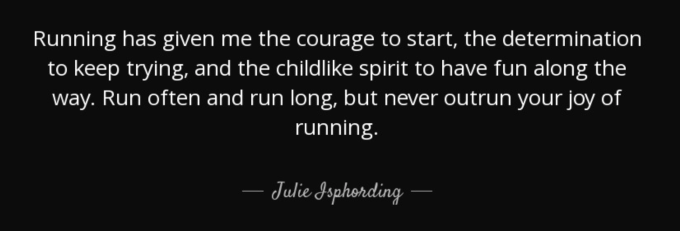
Remember that you are doing this for you. Running has given you courage, strength, determination, and a way to love yourself first. Never outrun your joy of running!

Screen Shot 2017-03-18 at 4.12.06 AM

Day 13: Get Fired Up!

Screen Shot 2017-03-13 at 5.33.37 AM

Are you FIRED up for another great week? Or are you starting to feel the drain of the month and already wanting to slack?

We are almost halfway into the month and if you’re already feeling the flame subside, it’s time to reset again and keep it back into high gear! Remember…this month is all about keeping that fire lit and pushing through STRONG!

If you’re already waining, I want you to take a few minutes to remember why you are here. Think about your short and long term goals and kick start that fire that got you moving in the first place. Screen Shot 2017-03-13 at 5.42.28 AM

I know you’ve probably got a million things on your to do list…. but this one needs to move to this top!

You WANT it. You NEED it. You DESERVE it.

GET FIRED UP CREW!!!

Day 10 exercises: 3 sets of 10 – Arms and Core 

****Click here for how to videos****

  • Rotational Shoulder Press
  • Standing Core DB Swing
  • Push Ups
  • Wall Sit – :60 (post run)

Challenges:

  • Ab Challenge: 30 Crunches, 30 Bicycle Crunches, 30 Leg Lifts + :50 Plank
  • 30 Burpees

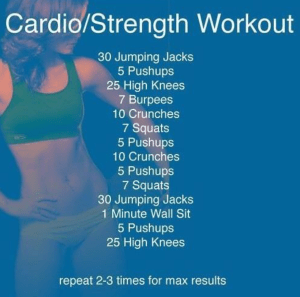
Bonus: #CardioStrengthWorkout – If you are running today, no need to throw in the extra bonus. If not…take the extra time to throw in a round or 2 of this cardio strength routine. Get FIRED up and get that heart pumping! 🙂

Screen Shot 2017-03-13 at 5.45.53 AM


Speed Work: Ah the dreaded speed work…but with great work comes great rewards! Remember that speed work has added benefits….

Upping the Oxygen – One part of the speed formula built around a variable known as VO2 max. VO2 max is a laboratory measure of the maximum amount of oxygen your body can process at peak effort. In other words, it’s a measure of the power of your aerobic engine with all the part—heart, lungs, capillaries and muscles—working at aerobic maximum. VO2 max is developed through training at high intensities. This is important for running short distances like a 5K AND long distances like a marathon! Speed training also forces the body to learn to make use of “higher” energy systems not taxed during slower workouts. According to a Runners World article on speed training for marathoners, “The benefit [of speed work] is that you develop energy systems that utilize higher rates of glycogen and less fat than marathon pace. As you become more economical at faster paces, in theory you should become more economical with fat utilization at the slower pace, the marathon pace.” They also note that such training helps the body deal with glycogen depletion late in the marathon.

What do they suggest? Mile repeats! Yep…longer distance speed work is essential to building up your VO2 Max and learning to tax your body for longer periods of time to increase your oxygen intake.

So there it is…speed work this week is mile repeats. FUN! 🙂

To find out how many of these little buggers you are running this week, look at your total average weekly mileage, then factor in 8-10%. That is your distance for speed work.

  • 10-15 miles per week = 1-2 miles @ 10K pace
  • 20 miles per week = 2 miles @ 10K pace
  • 30 miles per week =  3 miles @ 10K pace
  • 40 miles per week = 4 miles @ 10K pace
  • 50 miles per week = 5 miles @ 10K pace
  • 60 miles per week = 6 miles @ 10K pace

These repeats should be done at about 10K pace which is a tad slower than 5K pace but faster than you would run a half marathon. For example, my current 5K pace is about 8:25/mile, and my 15K pace is about 9:05/mile. So I should be right in the middle of that running my mile repeats at about an 8:40 – 8:45 pace for each mile.

Between each mile: stop, breathe, take a drink of water, then go again. These rest periods can be about 2 minutes each. If you don’t want to stop altogether you can slow it down to a walk or jog, but don’t skimp on the rest period, and don’t take too long either. You don’t want your heart rate coming all the way down to resting.

If you’re not sure what your 10K pace is, PLEASE reach out to me and let’s chat. I have a great tool for helping you figure out what your pace can and should be. PM me here and let’s figure it out.

That’s all for now Crew…another fabulous week ahead of us. Time to unleash your potential and GET FIRED UP!

Screen Shot 2017-03-13 at 6.13.55 AMScreen Shot 2017-03-13 at 6.14.16 AM