Day 19: Ab-solutley Necessary

big-girl-pantiesWhether you want to or not…strong abs are AB-SOLUTLEY necessary!

No…you don’t need a six-pack…but you do need strength because strong abdominal muscles help make you a better runner!

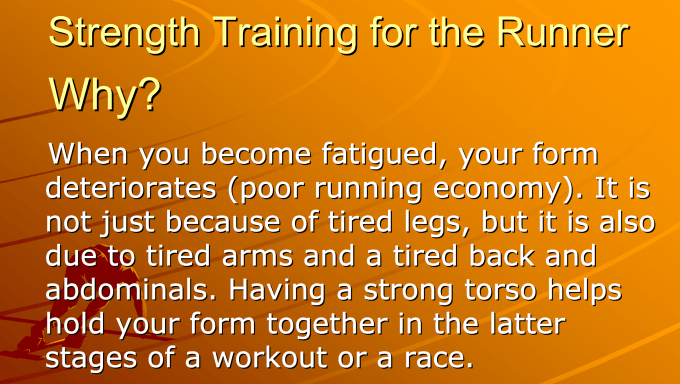
Since the abdominal muscles support the rest of the torso, runners with strong abs have better posture, a more stable gait, and fewer low-back problems.

Added bonus: Our abs also help us move our legs and shift our hips, so we derive more power for these actions when our abs are well-developed.

Having back pain? Work on your core! Having hip issues? Your core will help you stabilize those hips! Legs tired? Focus on that strong core to pull those legs when they just don’t want to take another step…

Yes Crew…Our ab days are AB-SOLUTLEY necessary. Don’t skip them!

Day 19 exercises: Abs & Shoulders – 3 sets of 15

****Click here for how to videos****

  • Mountain Climbers
  • Kettle Ball / Dumbbell Swings
  • Shoulder Presses
  • Plank – Your Choice (:60 2X)

Since I was a slacker and didn’t get you a post over the weekend, I neglected to check the calendar and remind you that we’ve moved up to :60 planks. OOPS! We’ve moved up! You’ve got this Crew! We’ve been working on it and now it’s time to add another :15 to those planks!

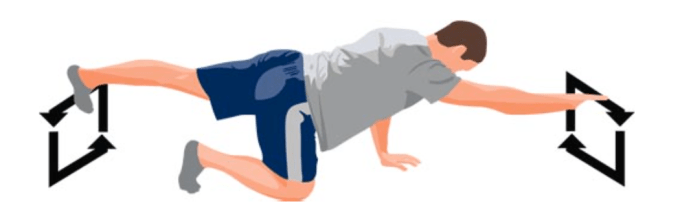
Bonus: In and Outs + Dead Bugs

Yes…2 bonus moves today. Two fun ones though so don’t cringe. These are great core stabilizing moves. Go through each exercise 3 times for 10-15 reps.

In and Outs – This move will strengthen your core and work your hip flexors.

  1. Begin by sitting on the floor or on a bench with your legs raised and your body leaning back.
  2. Bring your knees and chest together by leaning forward and pulling your legs up.
  3. Make sure to keep your abs tight and engaged during the movement. Your head and neck should stay up and forward.
  4. Lower your legs back down towards the floor. Keep them raised just off the ground.
  5. At the same time, lean your upper body back down to the starting position.

Dead Bug – This exercise helps to improve the overextended posture or excessive anterior pelvic tilt that can be a root of back pain and which can manifest into more profound back issues. Use this exercise to strengthen your abs and favour the proper posture.

  1. Lay flat on your back with your hands extended above you toward the ceiling. Bend your knees in 90 degree angle and raise your thighs until they are perpendicular to the floor. Now deeply exhale and embrace your abs to bring your ribcage down and flatten you back onto the floor. You shouldn’t be able to fit your hand in between the floor and your lumbar spine. Hold this position throughout the whole exercise.
  2. Slowly lower the right arm and the left leg down to the floor simultaneously. Lower them down until just before the lower back starts to rise off the ground (starts to arch). On your way down exhale all the air out of your lungs forcefully. Then slowly return to the starting position while inhaling. Alternating sides and continue the movement for specific number of repetitions or a certain period of time.

Speed Work: Slightly disappointed that I only saw 2 people…2 PEOPLE…get in speed work last week. Hopefully I just missed those posts?

I had cortisone shots in my knees on Tuesday and missed my track workout…but I threw in 5 fast miles at the end of y 22 miler on Friday…what was your excuse?

If you read y posts regularly, you know I subscribe to the RRCA IIP thought process. Introduce, Improve, Perfect. So if you did do speed work last week YAY!! Let’s do that again and IMPROVE! If you didn’t get it done, here’s another chance to introduce this speed work into your schedule this week. Yes Crew…10-12 x 400M. Let’s get it!

Two weeks ago we did a 5K to see where we’re at and what kind of pace we need to run for our speed intervals. Did you write your time down? Grab it and let’s see what you’re doing this week.

Workout = 1 mile warm up; 400M x 10-12X (2.5-3 miles); 1-2 mile cool down – Total of 5-6 miles 

Yes it’s a tough workout…but you can do it! A track is ideal for speed work but this is an easy workout to do on the road or the treadmill too. Do a slow warm up for 1 mile, then move into your 400M intervals. That’s either 1 time around the track, or .25 mile. After 400 meters (.25 mile), stop, rest, and breathe for :60. Then do it again for a total of 10-12 .25 mile repeats. When you’re done head out for a 1-2 mile cool down.

These intervals should not be done all out. Start a little slower than your goal pace so you have enough left to do all 10-12 repeats. If you can hold that pace, or close to it, for each interval you’re doing it right! If not…keep trying!

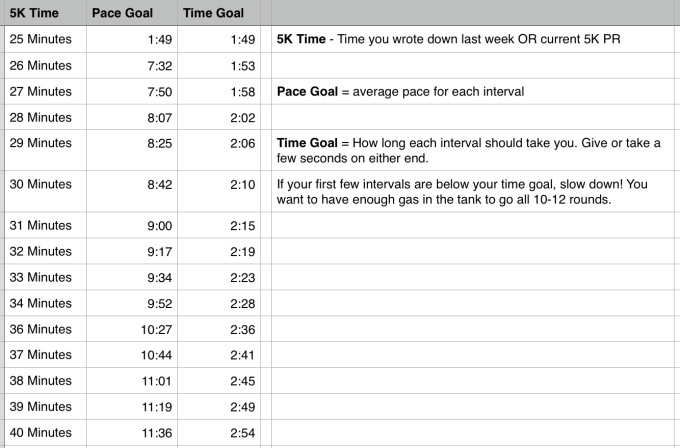
Below is the same chart from last week with 5K times, short interval paces and time goals starting at a 25 minute 5K. If your 5K is below 25 minutes or over 40 minutes, let me know….but this should cover most of us.
screen-shot-2016-09-11-at-8-32-54-pm

Now…please PLAN for your speed work. Think about what day this week will be best for you to get this done. Without a plan…chances are it won’t happen. So in today’s post, I want to see when you are planning to get your speed work done. Deal?

When it’s all said and done, don’t forget to stretch!

Alrighty Crew…time to get to work! Cause we all know…

never-miss-monday-workout

Day 16: Short and Sweet…

short-and-sweetToday’s workout is short and sweet so let’s get it done and move on to the weekend!
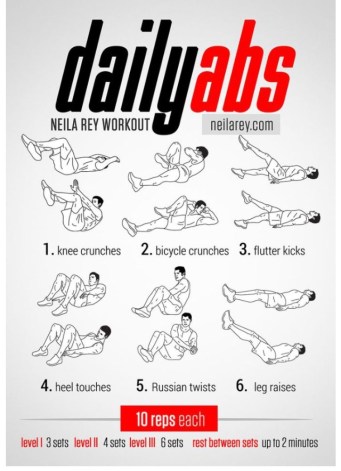
It’s an early up and out the door for me and some Jax Crew members so I’ll let you find your motivation to get today’s ab work done. 3 sets of 10 + a few rounds of Daily Abs and you’re good to go!

But hey…our workout is short and sweet so all the more reason to watch what you eat! 😉

Day 16 exercises: Abs – 3 sets of 10

****Click here for how to videos****

  • Crunches
  • Dumbbell Side Bends
  • Russian Twists
  • Plank – Your Choice (:45 2X)

Bonus: #DailyAbs Daily Abs

How many rounds do you have in you today?

All that’s left is thinking about your weekend plan. Hydrate, rest, think about your pre-run meals, and STRETCH!

Don’t forget what we’ve done this week. Throw in a back bend and a straddle stretch to open your back, shoulders, hips, thighs, and hamstrings. So many areas hit with just two stretches.


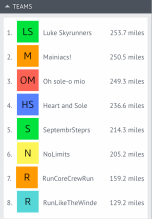
Quick Racery update from last night. If you logged some miles screen-shot-2016-09-15-at-6-29-08-pmafter about 6:30pm those aren’t counted in this update.
The top teams are pretty neck and neck. I know we’ve got some serious miles being logged this weekend so I’m excited to see where we stand on Monday!

Love you all and will see you after 22! Time to chase some dreams…run out of breath…then keep running! 🙂

chase-dreams-keep-running

Day 15: Don’t Get Comfortable!

dont-get-comfortableDid you know that when we run, we add hit the pavement with 3-4 times our body weight on each footfall?
3-4 TIMES OUR BODY WEIGHT!!!

If you ever wondered why strength training is crucial for runners…now you know! If you’re comfortable with the weight you’re using, it’s time to step it up and get out of your comfort zone!

In order to fully maximize performance, endurance athletes should improve their overall strength in relation to their bodyweight. That means adding heavier strength training into the mix. Building strength helps runners absorb force better when their feet crash into the pavement and produces more force to propel us off the ground. Which all happens in the blink of an eye.

How do we build more strength? We add more weight to our exercises…and the perfect place to to start is our squats and deadlifts. If you’re working out from home, use your heaviest weights for these exercises today. If you find that’s it’s easy, it’s time to think about getting some heavier weights!

If you’re hitting the gym, pick up weights heavier than you’re used to.

Adding heavier weight targets type II muscle fibers — those responsible for power generation and maximal strength. By increasing type II muscle fibers, runners will be able to produce and absorb more force even over distance. Think about it…every time you hot the pavement, 3-4 TIMES YOUR BODYWEIGHT crashes into the ground.

Are you comfortable? Time to step it up!

Not only are we adding weight, we’re also adding reps! This week we move up to 3 sets of 15. You got this!

Day 15 exercises: Legs/Stability – 3 sets of 15 

****Click here for how to videos****

  • Donkey Kicks + Fire Hydrants – Have some leg weights? Add them!
  • Weighted Squats
  • Deadlifts
  • Plank – Your Choice (:45 2X)

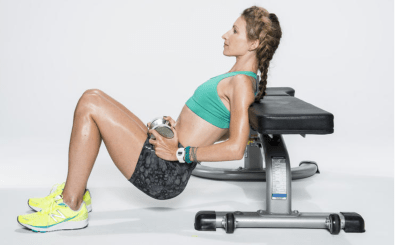
Bonus: Weighted Hip Thrusts – Everyone really seemed to enjoy them and after Cris Denniston mentioned them yesterday, I knew it was time to throw them back in the mix. Here’s a reminder on how to do them.

Weighted Hip Thrust: With a dumbbell resting in the crease of your hips, sit on the floor with the bottom of your shoulder blades touching a bench or couch or even a chair if it’s study and won’t hurt your back. Drive through your heels and thrust your hips up toward the ceiling while contracting your glutes. Your torso should be parallel to the floor. Lower and repeat 8 to 10 times for 3 sets.

Screen Shot 2016-08-31 at 7.52.47 PM


Speed Work: Everyone has been killing it tis week and I’m sure I’ve some of your awesome posts, but I’ve been watching for it and am sad to say speed work has not been on the menu for many of you. Jennifer Moro-Ortiz killed her 10 x 400s yesterday…is Jen the only one who wants to get faster and building better breathing economy? I know that’s not true!

If you’re going long tomorrow or Saturday, sorry Charlie, you’ve already missed the speed work boat this week. It’s too close to your long run to have enough time to recover fully. Next week, PLAN BETTER!

If you’re going long on Sunday, you still have time. I’d LOVE to see some awesome speed work today!! Click here to find this week’s workout and the pace you should be running for each 400M interval.


Next up…STRETCH! If you had a hard time with yesterday’s back bend, you need to work on overall flexibility. I know what you’re going to say, I’m too old, I’ll never be flexible again, it’s nit worth worrying about. WRONG! Flexibility takes effort and practice, and after a few months of consistent stretching, I am able to get down into a full straddle!

It really is difficult to exaggerate the importance of hip flexibility and strength for every athletic activity.

The hips provide most of the incredible power and force that our lower body can generate for running and jumping, and deficiencies in strength and flexibility in this area of the body can mean the difference between a winning performance or a painful end to the game.

Beyond just getting stronger and more flexible to improve our running, issues with our hips can negatively impact your daily life. Possible issues include pain, decreased mobility for activities such as stooping and squatting, and even difficulty with simple daily encounters such as jumping over a puddle in the street.

Straddle Stretching: Throw in some straddle stretching today. Watch the video below to see all the key points in our legs that benefit from this stretch. No I don’t want to you go and spend money on the Kinesiologial stretching programs, but this will show a few quick ways to ease into this awesome stretch. I’d love to see some straddle pics today! 🙂

Don’t forget our 7 Key Stretches for Runners + a good Pigeon Pose! Take the time after your workout, our save it till later when you’re relaxing in front of the TV. No matter when you do it, please stretch out those glutes, hamstrings, quads, calves, and back….long runs are coming!

It’s strong Thursday Crew! Because….you never know who you’re inspiring! 🙂

be-strong


Day 14: So That’s Where They Went…

thats-where-my-boobs-wentSorry fellas…this one is for the ladies…but don’t try to skip out on arm day!

It’s a common problem for a lot of us. We work out, lose weight…and lose other stuff too!

Good news? They don’t go away…they just move around to make us stronger! 🙂

Let’s make sure we put those lost boobs to good use… it’s Arm Day! YAY!!

Day 14 exercises: 3 sets of 10 

****Click here for how to videos****

  • Push Ups
  • Hammer Curls
  • Monkey Arms
  • Plank – Your Choice (:45 2X)

I know the monkey arms feel weird but try them. Use smaller weights if needed or grab some water bottles if you don’t have weights small enough.

Don’t forget to try the Hammer Curls Swings if you want to step it up a notch. Click here to see how these Hammer Curls swings are done and how they can help you run faster!

Bonus: Shoulder Shrugs – Training your upper body improves your posture and getting rid of rounded shoulders will help you get more air in and out of your lungs. You’ll also carry your arms more easily, wasting less energy in your runs. Try this exercise toscreen-shot-2016-09-14-at-5-27-11-am stand taller and build strength in your shoulders and arms.

Use your heaviest weights and stand tall with weights in each hand,. Rise up on your toes while lifting your shoulders up to your ears. Come back down. Make sure you are using heavy enough weights to feel this in the top of your shoulders and in your calves. Repeat 15 times for 3 sets.

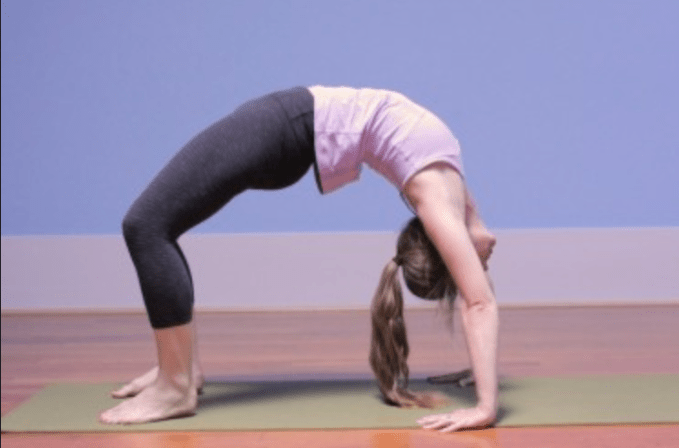
Extra Credit Photo: Let’s have a little fun today and see who can do some amazing back bends! I know a few Core Crew members who can rock these….Stretch out your arms and shoulder and show us your best back bend!

screen-shot-2016-09-14-at-5-38-30-am


This is not a hard day y’all…should be pretty quick so take today to add in your speed work!

Speed Work: I haven’t had a chance to look through a lot of yesterday’s posts yet….but I haven’t seen much speed being thrown in this week. Show me some speed Crew! Click here and scroll t the bottom for this week’s speed work and pace info!

End your day with our 7 Key stretches for Runners, then pat yourself on the back for a hard days work!

screen-shot-2016-09-14-at-5-43-11-am

Day 13: Strength & Stability Leads to Greater Mobility & Better Technique

stregnth-and-stabilityIn theory, running isn’t a two-legged activity. Of course, we have to use both legs, but it’s really a series of one-legged stances conjoined by the act of managing a controlled fall.

There is never a time when both feet are on the ground. So single leg strength and stability couldn’t be more important for runners.

While we’re running the body does whatever it takes to stay upright and balanced, often recruiting the strength of other muscles. We must work harder than normal to run the same pace over a given distance, especially as the bigger, stronger muscles become fatigued; this leads to a reduction in running economy.

A reduction in running economy causes some muscle groups to overcompensate, leading to gait changes, which can cause nagging dilemmas such as a sore Achilles tendon or iliotibial band syndrome to more serious injuries such as anterior knee pain or plantar fasciitis.

What’s the solution? Work on strength and stability the same way you run—one leg at a time. Single-leg balance training teaches you to isolate and strengthen specific balance muscles while improving your reaction time. Only when muscles are balanced can the body run fast and efficient for long periods of time.

Lucky for us, our Tuesday Leg/Stability day hits these marks perfectly so let’s get to work!

Day 13 exercises: Legs/Stability – 3 sets of 10

  • One Legged Bridge – 3 sets of 10 each side
  • Side Lunges – 3 sets of 10 each side
  • Side Lying Leg Raises – 3 sets of 10 each side
  • Plank – Your Choice (:45 2X)

Bonus: Single-Leg Balance Drill 

“Think” – dynamic warm up – single leg swing we do before a race to loosen up but without using something to keep our balance.

WHY: The most relevant to running, it activates your arch to maintain good foot and ankle alignment.

HOW: Start by standing on your left leg, lift your right leg straight toward the 12 o’clock position if you were standing on a clock. Gently swing the right leg forward and back, from 12 o’clock to 6 o’clock. Repeat 10 to 15 times each leg. It’s important to use this exercise to build balance and strength so do your best not to hold onto anything but it’s ok to stand close to a wall or doorway to keep from falling.


Speed Work: Have you made a plan to get your speed work done this week? Do you know what intervals and the pace you should be running? If not, please click here and scroll to the bottom of Monday’s post for all the info.

Remember that speed work is not just for runners who want to log faster times; speed work will also help you improve your running/breathing economy, resulting in feeling better/breathing better during your long runs!

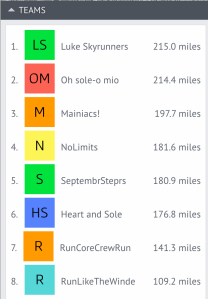
Throw in some post run stretching and don’t forget to log your miles for Racery! Current team standings are below:

screen-shot-2016-09-13-at-6-09-46-am


Don’t let you excuses catch up with you…Keep Running Crew! 🙂

keep-running

Day 12: Purrrrfect Workout

purfect-abs

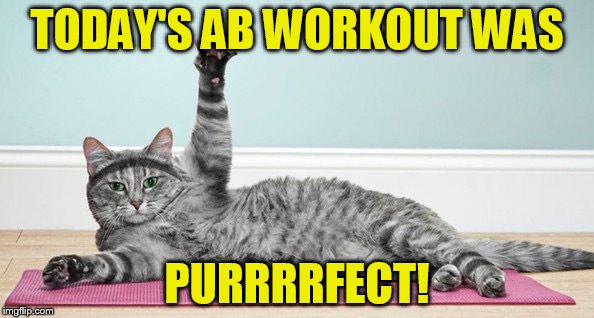
Today’s ab and shoulder workout is a great way to build upper body and core strength…and it’s the purrrrfect way to start our week!

3 rounds today, throw in a little bonus work, then plan out your running schedule for the week. When will you get your speed work in? Plan now so you have plenty of time to get in some other short runs and recover before going long again on the weekend.

If you want to succeed, you must have a plan!


“BRACE YOURSELF”

Before getting started, let’s about “bracing”.

According to the Runner’s World article, “Building Running Specific Core Stability”, bracing is the neuromuscular exercise of abdominal bracing, which entails simultaneously co-activating all of the muscles that surround the spine. The purpose is to teach the body how to prepare for stabilization.

If you’re jostled in a race, getting tired and need your core stability to hold you upright, or lose your footing in a race or trail run, your brace should naturally engage, stiffening the spine and improving your ability to quickly reposition. Bracing should be performed during all core and whole-body strength/stability training.

To practice bracing, pretend you’re going to be punched in the stomach; this should stimulate all the muscles to tighten around the spine. However, you must be able to do this without holding your breath. Training the brace independent of breathing is essential for optimal exercise execution and performance in sport. This brace will help “groove” this supportive pattern so that, over time, it will activate with an unconscious effort.

Practice “bracing” a few times before you start your exercises, think ‘getting punched in the stomach’, and hold that position for a ten count, then release. Practice “bracing” a few times then use this core activation while you’re doing each of the exercises. This simple move is one you can do anywhere, anytime to tighten and tone your abs, and to train them to support yourself unconsciously when you need it most.

Day 12 exercises: Abs & Shoulders – 3 sets of 10 + Planks

****Click here for how to videos****

  • Mountain Climbers
  • Kettle Ball / Dumbbell Swings
  • Shoulder Presses
  • Plank – Your Choice  (:45 3X)

Bonus: Bird Dog with Squares – Get on your hands and knees and brace with a neutral spine. Without moving your spine, reach out one leg and the opposite arm. Outline a square with each outstretched limb while maintaining the curve in your spine. Return both to the starting position and repeat on the other side. Perform 3 sets of 6 repetitions per side. Add this to your ab arsenal for a great bonus workout whenever you have a few extra minutes.

screen-shot-2016-09-11-at-7-01-49-pm


On to the fun stuff!

Speed Work: Last week we did a 5K to see where we’re at and what kind of pace we need to run for our speed intervals. Did you write your time down? Grab it and let’s see what you’re doing this week.

Workout = 1 mile warm up; 400M x 10-12X (2.5-3 miles); 1-2 mile cool down – Total of 5-6 miles 

Yes it’s a tough workout…but you can do it! A track is ideal for speed work but this is an easy workout to do on the road or the treadmill too. Do a slow warm up for 1 mile, then move into your 400M intervals. That’s either 1 time around the track, or .25 mile. After 400 meters (.25 mile), stop, rest, and breathe for :60. Then do it again for a total of 10-12 .25 mile repeats. When you’re done head out for a 1-2 mile cool down.

These intervals should not be done all out. Start a little slower than your goal pace so you have enough left to do all 10-12 repeats. If you can hold that pace, or close to it, for each interval you’re doing it right! If not…keep trying!

Below are 5K times with short interval paces and time goals starting at a 25 minute 5K. If your 5K is below 25 minutes or over 40 minutes, let me know….but this should cover most of us.

screen-shot-2016-09-11-at-8-32-54-pm

***RRCA Pace Chart Developed by Amby Burfoot (www.ambyburfoot.com) Only 5K times and paces listed here***

Example: My current 5K PR (ran at a race in May 2016) was 27:04. So I would use the 27 minute guideline and  run my intervals at a 7:50 pace, with the goal of finishing each one in around 1:58.

We ran this drill at my PRS track workout last week and I was able to pull times between 1:47 – 1:55 each. What did my Coach say? “You can run a faster 5K then 27 minutes.” This may be true…but I need more practice in order to put them all together. Remember, we are taking a :60 break in-between each interval to rest, breathe, and recover. It is a great confidence booster though and give me the motivation to keep working on it.

Speed work takes time, and practice. Do your best, write down your times, and compare your results each week. Remember…speed doesn’t come overnight, but if you keep working on it…you will get faster. Be patient and work hard Crew!

Questions? I’m here to help so please ask. if you are confused, don’t just go out willy nilly and do “whatever”. Reach out to me and let’s make sure you have your plan ready to go.

Let’s get to work and start the week off with a bang!

never-skip-your-monday

Days 10 & 11: Long Run + Stuff & Arms/Back

screen-shot-2016-09-09-at-4-33-36-pm

Time for our favorite workout of the week…our long run!

This weekend instead of doing the same old boring long run, let’s throw in some fun stuff.

“Stuff” refers to adding strides, surges, pickups or progressions to the typical easy or steady long run. The goal in adding these components is to change the stimulus for adaptation ever so slightly. By adding in some faster running toward the end of the long run, you force recruitment of muscle fibers that generally are never trained at an easy or steady pace. By slightly changing which muscle fibers are recruited, you now train those harder-to-recruit fast twitch-type fibers under aerobic conditions, therefore increasing their endurance.

Strides and surges are two easy ways to get a little more bang for your buck during the long run without adding much undue fatigue. They both work by changing the muscle fiber recruitment slightly, and can prevent the post-long run flatness that often occurs. This happens because the faster segments change the tension in the muscles and leave you with some “pop” in your legs instead of staleness.

Strides should be done immediately after the completion of the long run and should include four to ten by 100-meter runs in length at about your 10K race pace. This should be seen as an introductory session, which then progresses to surges over the following weeks.

Surges should be done during the last 3-4 miles of the long run and should include segments where you pick it up to around 10K race pace and then back off to your easy pace for a short segment. I recommend starting with 5 x 30-second surges with two minutes of easy running between reps and work your way up progressively to where you’re doing 8-10 x 45 to 60-second surges with 2-3 minutes recovery in between.  This should not be a taxing workout, but instead a comfortable surge that lets the legs loosen up a little bit.


Pickups and progressions are two slightly more challenging options for adding some spice to your long run. The goal of these runs is to press the pace down so that the body gets used to increasing speed, increasing the aerobic demand, and recruiting muscle fibers when glycogen levels are getting progressively lower at the end of the long run. Once again, we are looking at training muscle fibers that aren’t normally trained aerobically and triggering the body to become more efficient with using up its glycogen stores.

Pickups should be introduced in small doses. Start by picking up the pace to marathon race effort or slightly faster during the last 5 minutes of your long run. Every few weeks, increase the length of the pickup by 5 minutes until you get to the point where the last 20 minutes of your long run is done at a quicker pace.

Progression long runs, on the other hand, should take a gradual approach. Instead of spending the last bit of your long run making a sudden change in speed, spread that speed increase out over a longer distance. Start with a gradual progression over the last quarter of your long run (the last 4 miles of a 16 mile run, for example) and increase that until the last half of your long run is spent gradually ratcheting down the speed. The goal is the same: get down to just faster than marathon race pace by the end of the run.

Progression runs sound very similar to negative spits, but there is a difference. Negative splits refers to your time coming down a little bit each mile. A progression run is where your time stays very similar during the first part of your run and then you choose a point where you pick up the speed and hold that pace over the last portion of your run.

What type of run will you choose this weekend?

  • Strides
  • Surges
  • Pickups
  • Progression

Remember these different long runs are not just for distances over 10 miles. You can do these types of workouts with any mileage…just make a conscious choice before you start and add it in as you go. If you’re doing a 3-5 mile long run and want to do a progression run, do the first 1.5-2.5 miles at a slower pace then pick up the pace and hold it for the last 1.5-2.5 miles. If you’re thinking pickups, for the last 5-10 minutes of your run, pick up your pace to the pace you want to run at your next race.

The whole point here is to start taxing your body a little each long run so it starts to get easier and more comfortable. This way, when it’s time to race, you’re ready to hold that faster pace.

Whatever you decide, make a plan before you head out. Having a plan is very important to ensuring you know what to do, how to do, and are successful following through.

Day 10 exercises: Long Run + 7 Key Stretches for Runners + Plank – Your Choice (:45 2X) 

Day 11 exercises: Arms/Back – 3 sets of 10 

****Click here for how to videos****

  • Burpees
  • Bicep Curls 21s (3 sets of 21)
  • Wide Rows
  • Plank – Your Choice (:45 2X)

Bonus: Active Recovery and/or Yoga for Runners – use today’s bonus to get you moving and stretching out your muscles after your long run. Go for a short easy run (30 min or less), or chill out and go through our Yoga for Runners at home. Either way, an active recovery will help with post-run soreness and stiffness.

Racery: Don’t forget to keep logging your Racery miles. Click here for the Racery page to log your miles and see how your team is doing.

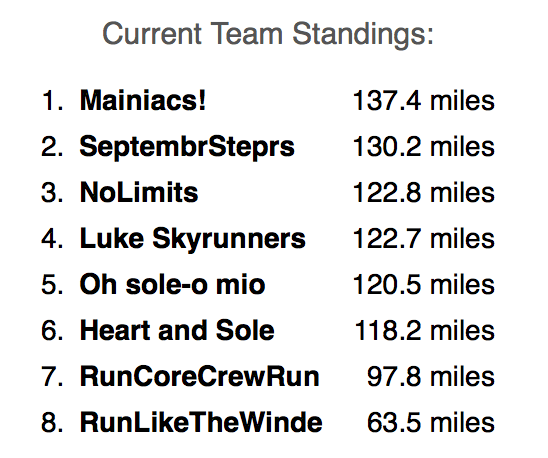
Current team standings:

screen-shot-2016-09-09-at-4-50-45-pm

Before you go…I want you to make a decision on what kind of “stuff” you’re adding to your long run. Post it in Strong to the Core under this pinned post so we can keep you accountable and cheer you on!

Have a fabulous weekend and get ready to go the distance Crew! 🙂

screen-shot-2016-09-09-at-5-07-59-pm

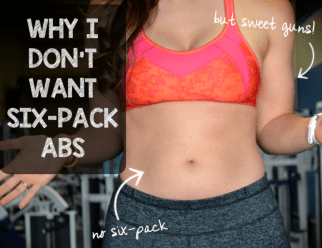
Day 9: No Six-Pack Needed

screen-shot-2016-09-09-at-5-26-08-am

Six Pack Abs are a highly coveted physical attribute in the world of health and fitness. The pursuit of health perfectionism has become an obsession, and a thin waistline adorned with six-pack abs is at the forefront. But chasing a body shaped by conventional standards of attraction and achieving an ideal midsection can turn out to be a long and dangerous road,  leading to hormonal, emotional, and physical issues.

This isn’t because six-pack abs are inherently bad or unhealthy, it’s because the pursuit and achievement of six-pack abs can bad and unhealthy for us.

Why?

1. They serve no functional purpose. 

Having a visible six-pack serves no functional purpose for the human body. This is because defined abdominal muscles are usually the result of extraordinary leanness, not increased functionality and strength. While having a strong, stable core is most definitely necessary to support the body – it doesn’t have to be visible to function properly.

2. It won’t make us any healthier.

Because having a six-pack serves no functional purpose, it’s safe to assume it also doesn’t provide any added health benefits. There are plenty of healthy, fit and athletic men and women without a six-pack, many of whom are stronger and faster than those who sport abdominal definition.

4. It’s important to support our body with food.

To achieve the leanness needed see abdominal definition, we have to eat less food than our body requires. As a result, it’s easy to become obsessed with food intake, and it becomes was all you think about every-second-of-the-day. Eating below our necessary caloric needs, means not recovering well from training, and being much more prone to injury. This also leads to bouts of depression and anxiety.

Having a healthy relationship with food and being in love with how it nourishes our body, is the best outlook. Loving the way we look, what our body does for us, and not thinking twice about eating chocolate at 3pm is worth way more than anything a six-pack has to offer.

7. We have other fitness goals. 

Achieving a six-pack takes a hella lot of work. When abdominal definition is the end-goal, almost all of your fitness time must dedicated to becoming lean. This is not our end goal. Our end goal is to become stronger, faster, and healthier.

It’s important to love our relationship with fitness. We don’t need to spend hours working on our core, we just want to be strong enough to carry us through our tough runs and look decent in our clothes. We want to do activities that we enjoy, not spend hours doing core work.

We want to be healthier, stronger, and more fit…but that doesn’t mean we have to have that “coveted” six pack abs.

screen-shot-2016-09-09-at-5-43-52-am

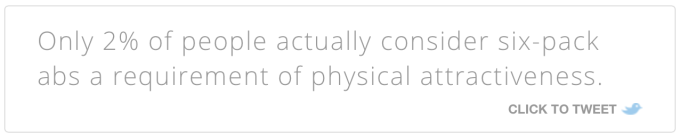
Don’t worry about pleasing this two percent of people because six-pack abs are not requirement of physical attractiveness, and pursing a six-pack would be a complete waste of our time.

Six-pack abs are not inherently bad or unhealthy. If you’re sportin’ a six-pack and have a vibrant, healthy body and outlook on life – keep at it! But next time you’re inclined to “pin” an image adorned with six-pack abs designed to tell you “your body isn’t good enough unless it looks like this” – I challenge you to ask yourself, “Who am I doing this for?”

Let’s be healthy, strong, and fit. Let’s work towards reaching our goals, without obsessing over the perfect body image. Yes you need to watch your caloric intake…but not to the point of obsession. Be mindful, without going to far.

Today’s workout will help you achieve your goals, without taking all day!

Day 9 exercises: 3 sets of 10

****Click here for how to videos****

  • Crunches
  • Dumbbell Side Bends
  • Russian Twists
  • Plank – Your Choice (:45 2X)

Bonus: #DailyAbs – There’s always the options to do a little more…but our Daily Abs routine is quick and efficient. Do a few rounds for an extra burn, then enjoy your day. Relax, get some rest, hydrate, stretch, roll out your legs…and get ready for those long runs!

Daily Abs

Day 8: No Ifs, Ands Or Jiggly Butts

screen-shot-2016-09-07-at-5-28-18-pm

Got excuses? NOT TODAY! No ifs, ands, or jiggle butts…that means YOU! No Excuses!

You know cardio isn’t a leg workout right?Yes running does wonderful things for our legs and butt…BUT it’s not enough!

The best strength exercises for runners have two characteristics:

  • They prevent injuries by focusing on the specific needs of runners (hip and glute strength)
  • They are compound, multi-joint movements like squats (the machines in the gym do NOT count)

For most runners, the largest benefit of strength training is a reduction in running injuries. With stronger muscles, connective tissues, and more resilience to fatigue, you’ll get hurt less often..and be able to increase your speed easier.

According to StrengthRunner.com,”here is a list of the best strength exercises for runners:

  • Squat
  • Deadlift
  • Lunge
  • Push-up
  • Plank

They’re simple, basic movements that all of us as runners should be able to do.”

The best news? We do all of these exercises!

screen-shot-2016-09-07-at-5-54-40-pm

Need more reasons to ditch the excuses? We all know this…but it never hurts to be reminded…Why do we take the time to strength train? Read on…

screen-shot-2016-09-07-at-5-58-34-pm

Enough chatting…let’s get to work.

Day 8 exercises: 3 sets of 10

****Click here for how to videos****

  • Donkey Kicks + Fire Hydrants
  • Weighted Squats
  • Deadlifts
  • Plank – (:45 2X)

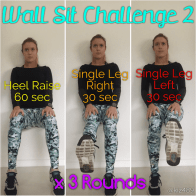
Bonus: #WallSitChallenge screen-shot-2016-09-07-at-6-14-25-pm

I know you love wall sits so lets do it 3 times!

Wall sit with heel raise for 1 minute, single right leg raise for :30, then single left leg raise for :30.

You can do this! Take a break into between if you need to but push through!


No ifs, ands, or jiggly butts…and no excuses Crew!

screen-shot-2016-09-07-at-7-54-57-pm


Day 7: Trying Your Hardest?

trying-my-hardestYes, you run.

Sure…you’re getting a few strength days done here and there…

Maybe you’re kinda watching your diet a little…sometimes…

But are you really trying your hardest?

Are you doing everything you can do to reach your goals? Are you hitting each day as hard as you can? Are you making healthy eating choices and putting in the real work when it comes to your running and strength training?

If not…don’t complain about not hitting that goal time you want. Don’t complain about not being able to get through that long run. Don’t complain about not seeing the weight come off.

You might not be the strongest or the fastest…but if you’re trying your hardest, you will reach your goals. Be honest with yourself….are you really giving it your all?

Day 6 exercises: 2 sets of 10 – Arms & Back 

****Click here for how to videos****

  • Push Ups
  • Hammer Curls
  • Monkey Arms
  • Plank – Your Choice (:30 2X)

Remember that Hammer Curls can be just the arm movement as Scott Herman shows us in our how to videos, or you can step it up and try sprinter Tyson Gray’s Swinging Hammer Curls.

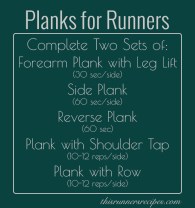
planks-for-runnersBonus: #PlanksForRunners – We all know how great planks are for our whole body…and this plank workout is perfect for Arm and Back day. Will you try your hardest today and go the extra mile to get the strong arms and back you need to run stronger?
2 sets….GETTT ITTT!! 🙂


It’s easy to work hard when you feel good….but do you try your hardest when you don’t feel like it?

This choice is what separates those who reach their goals and those who are disappointed when they fall short.

How hard will you work today?

screen-shot-2016-09-06-at-8-08-19-pm